For parents of shy or quiet kids
Help Your Child Make Friends, Speak Up, and Build Real Confidence
A practical step-by-step guide that teaches the skills behind confidence, friendship and resilience — in just a few minutes a day.
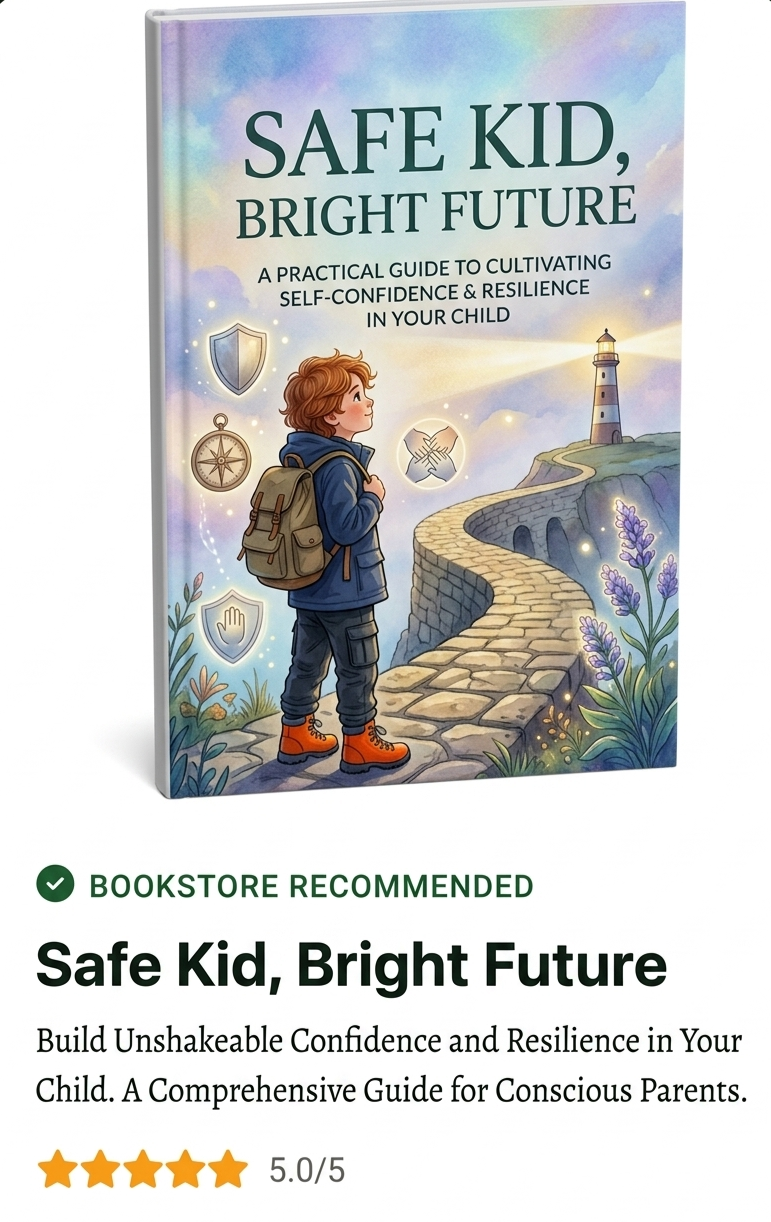
- ✓Joins other kids instead of watching from the sidelines
- ✓Starts conversations and builds real friendships
- ✓Speaks up in class with more confidence
- ✓Recovers from mistakes instead of giving up
✔ Secure checkout · ✔ Instant access · ✔ 90-day guarantee
A message for you
If You Clicked Because You Recognized Your Child…
You already know something most parents miss.
You've seen the quiet look in their eyes when other kids run past them at the park. You've watched them go silent at birthday parties. You've heard them say "nobody wants to play with me" and felt your heart drop.
You're not here because your child is broken. You're here because you love them enough to look for the answer nobody's giving you.
Keep reading — the next few minutes could change how they walk into school tomorrow.
Does This Sound Like Your Child?
If more than one felt familiar, this page was written for you.
The Real Danger Isn't Shyness
Shyness fades. What doesn't fade is what a child learns to believe about themselves while they're being shy.
Every time a child avoids joining, they practice "I can't."
Every time they stay silent, they practice "My voice doesn't matter."
Every time they give up, they practice "I'm not enough."
Repeated avoidance doesn't stay a habit. It becomes identity.
Why Most Parents Accidentally Make Confidence Worse
Not because they don't care — because they were taught the wrong tools.
✗ "Just be confident."
→ Confidence isn't a command. It's a skill built through small daily moments.
✗ "They'll grow out of it."
→ Without the right skills, avoidance becomes identity — not something they outgrow.
✗ "They're just shy."
→ Shyness is often the visible symptom of something teachable underneath.
The insight that changes everything
Confidence Is Not A Personality Trait.
It's a skill.
And skills can be taught. Practiced. Strengthened. By any parent, in any home, starting tonight.
Our unique approach
The Mirror Method™
Children learn confidence the same way they learn language: through daily modeling and repetition.
Learned
Through small daily moments — not big speeches.
Practiced
A little, every day — like reading or riding a bike.
Strengthened
Each small success reinforces the next one.
A taste of what's inside
Try This Tonight
One of the 30 Confidence Conversations — use it at dinner or bedtime:
"What's one small thing you did today that took a little bit of courage?"
"I said hi to the new kid…"
"That's exactly what brave people do. They feel nervous — and they do it anyway."
Small. Specific. Repeatable. That's how confidence gets built — one conversation at a time.
Everything included
Inside Safe Kid, Bright Future
- ✓The complete 8-module ebook
- ✓30 Ready-to-Use Confidence Conversations
- ✓The 5-Minute Confidence Ritual
- ✓5 exclusive bonuses (see below)
- ✓Lifetime access + instant download
- ✓90-day money-back guarantee
The 8 modules
What Your Child Will Learn
The real reasons behind shyness — and what to do instead of pushing.
Exact phrases for breakfast, the drive to school, dinner and bedtime.
A short daily practice that turns confidence into a repeatable skill.
Teach your child to recover — instead of shutting down.
From "I don't know" to real opinions and preferences.
How to start a conversation, join a group, keep a friend.
Raising hands, joining games, trying new activities — without forcing.
A foundation that carries them through adolescence and adulthood.
+ 5 exclusive bonuses
Bonuses Included Today

Hidden Strengths Diagnostic
Discover the gifts your child already has — and how to name them.
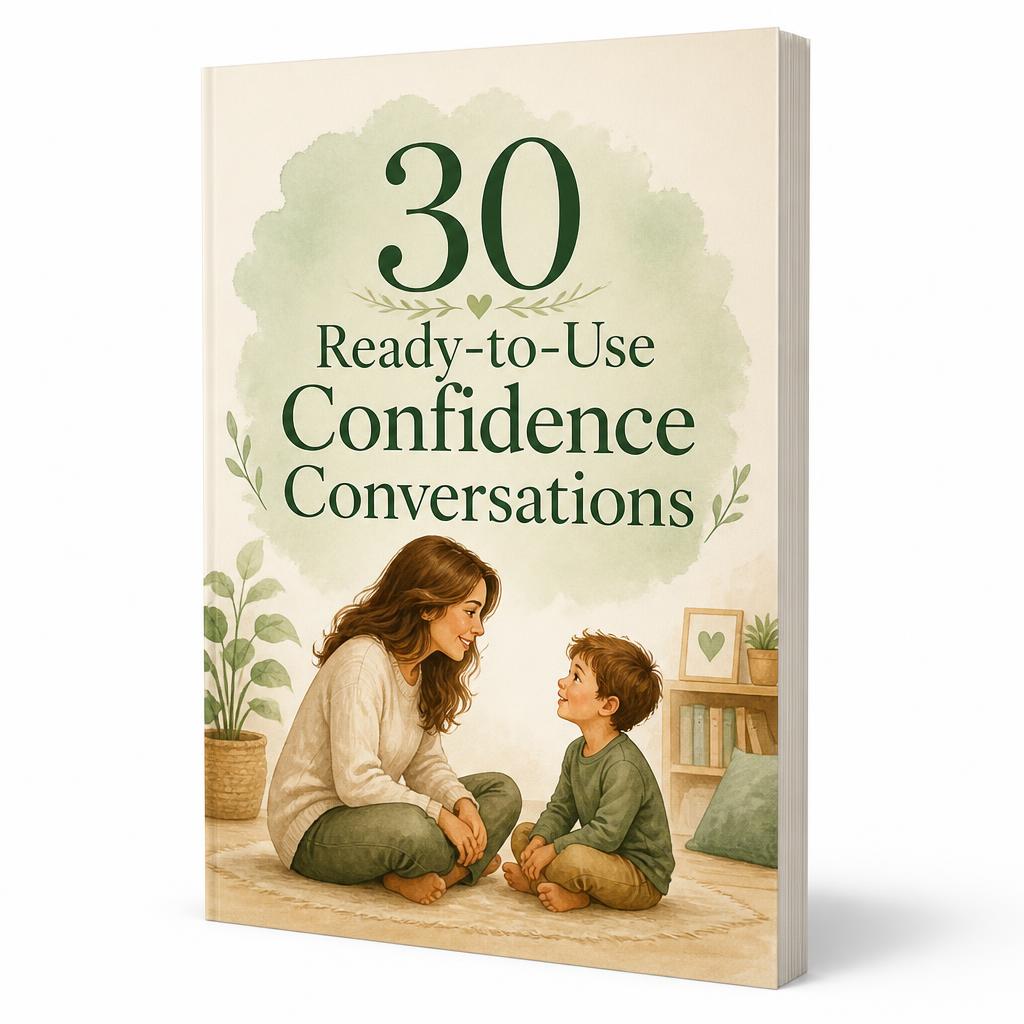
30 Ready-to-Use Confidence Conversations
One-a-day scripts you can start using tonight.

Healthy Friendships Guide
Help your child choose kind, safe, supportive friends.

Fear of Failure Antidote
Turn mistakes into fuel instead of shutdowns.

Safe Future Roadmap
A month-by-month plan for lasting confidence.
Before vs After
Imagine This…
It's a Tuesday afternoon. You're waiting outside the school gate like every other day.
The bell rings. Kids spill out. And then you see your child — running toward you, backpack bouncing, cheeks flushed.
"Mom! I made a new friend today. His name is Leo. Can he come over on Saturday?"
No pushing. No forcing. Just a child who finally believes they belong.
What Other Parents Are Seeing
★★★★★
"My son used to watch the other kids from the bench at every birthday party. Three weeks in, he came running over to tell me he'd made a new friend. I cried in the car."
— Sarah M., mom of a 7-year-old
★★★★★
"Her teacher emailed me to say she'd raised her hand for the first time. We'd been doing the 5-minute ritual every night before bed. Such a small thing — such a huge change."
— Jessica R., mom of an 8-year-old
★★★★★
"I stopped saying 'just be confident' and started using the conversations from the guide. He talks to me about his day now."
— Amanda T., mom of a 6-year-old
★★★★★
"She used to say 'nobody wants to play with me.' Now she invites kids over. Same child. Different skills."
— Megan K., mom of a 9-year-old
Today only
Safe Kid, Bright Future
You save $30
- ✔Complete ebook (8 modules)
- ✔5 exclusive bonuses
- ✔Lifetime access · instant download
- ✔Secure checkout
- ✔90-day money-back guarantee
One-time payment · no subscription
90-day guarantee
Read the material. Try the Confidence Conversations with your child. If you don't think it helped, request a full refund. No questions. No risk.
The Cost of Waiting Another Year
Every year a child spends avoiding — avoiding raising their hand, avoiding new kids, avoiding new experiences — is a year of practicing one silent belief:
"I'm not enough."
By adolescence, that belief hardens. It shows up as social anxiety, giving up on dreams, staying quiet in rooms where their voice was needed.
The window to teach confidence as a skill is now — while your child is still listening.
Frequently Asked Questions
Is it digital?+
Yes. Instant download right after purchase — read it on your phone, tablet or computer.
Do I need previous experience?+
No. Every conversation and exercise is written for any parent, even on a busy week.
Does it work if my child is very shy?+
Yes. The guide was designed specifically for shy and quiet kids who don't respond to typical motivation.
What age range is it for?+
It works best for children ages 4 to 12, and the conversations scale up with their maturity.
How much time does it take?+
Just a few minutes a day inside conversations you're already having.
What are Confidence Conversations?+
Small, intentional exchanges that teach your child the skills behind confidence.
Confidence Can Be Taught.
Tonight can be the first conversation of a very different childhood.
P.S. If you recognized your child in more than one moment on this page, that recognition is a gift — most parents miss it. The skills that build confidence are teachable, and they start with one different conversation tonight.